
A home does not usually become cluttered all at once. Small things accumulate throughout the week: shoes stay by the door, papers land on a table, clean laundry waits to be put away, and kitchen counters slowly collect items that belong somewhere else.
A weekly home reset gives those small messes a regular stopping point.
The idea is not to deep-clean every room or make the house look perfect. A reset is simply a short routine for putting frequently used spaces back into a comfortable, usable condition before another week begins.

Start With a Quick Walk Through the House
Before cleaning anything, spend a few minutes walking through the main areas of your home.
Do not start organizing immediately. Just notice what has accumulated.
Look for things such as:
- items left in the wrong room;
- laundry waiting to be folded or put away;
- papers and mail;
- dishes or cups outside the kitchen;
- shoes and bags near entrances;
- surfaces that have become temporary storage.
This quick check helps you see which areas actually need attention. Some weeks the kitchen may need most of the work. Other weeks it might be the bedroom or entryway.
A reset works better when you respond to what the home needs instead of following a long cleaning list whether it is necessary or not.

Clear the Main Surfaces First
Visible surfaces have a big effect on how organized a room feels.
Start with the places that tend to collect everyday clutter:
- kitchen counters;
- dining tables;
- coffee tables;
- bedside tables;
- desks;
- bathroom counters;
- entryway surfaces.
Move objects back to the rooms or storage areas where they belong.
You do not need to organize every drawer at this stage. The goal is simply to restore usable surface space.
In the kitchen, pay particular attention to items that have gradually become permanent counter clutter. If this is a recurring problem, the guide Kitchen Organize can help you decide what deserves to stay out and what could be stored elsewhere.
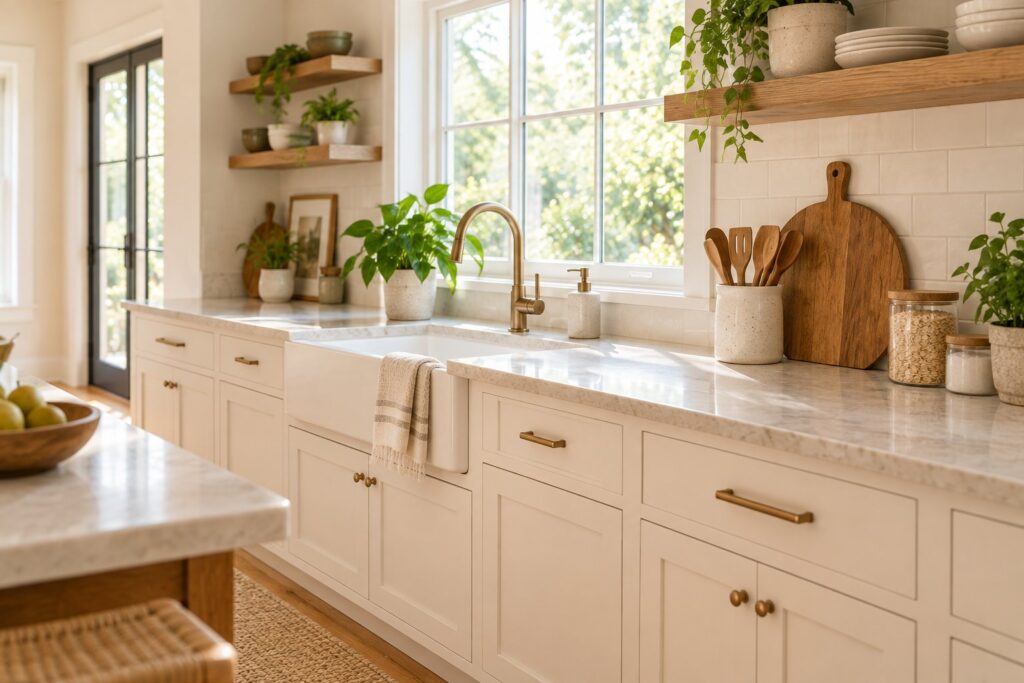
Once the main surfaces are clear, the rest of the reset usually feels much easier.
Return Items to Their Proper Rooms
One of the quickest ways for a home to feel disorganized is for objects to migrate from room to room.
A drinking glass ends up on the desk. A book moves to the sofa. A jacket stays on a dining chair. Toys or hobby supplies spread into common areas.
Use a basket or container to collect misplaced items as you move through the house.
Then make one trip to return everything.
This is often faster than carrying each item back individually, and it keeps you from repeatedly walking between rooms.
If an object regularly ends up in the wrong place, pay attention to that pattern. It may be a sign that its current storage location is inconvenient.

Reset the Kitchen
The kitchen is worth including in almost every weekly reset because it is used so frequently.
Start by putting away anything that does not belong on the counter. Return food to the pantry, put clean dishes away, and remove papers or miscellaneous household items.
Check the refrigerator for obvious leftovers that are no longer needed, and return frequently used ingredients to their usual places.
Then wipe the main work surfaces and sink area.
You do not need to empty cabinets or reorganize the pantry every week. The purpose of a weekly reset is maintenance, not a complete kitchen project.
A kitchen that is ready for the next meal is enough.
Reset the Living Area
In the living room, focus on restoring the room rather than cleaning every detail.
Fold blankets, straighten cushions, return books or magazines, and clear the coffee table.
Collect cups, dishes, chargers, toys, and other objects that have been left behind during the week.
If the room has storage baskets or drawers, use them intentionally rather than pushing random objects inside just to make the room look cleaner.
A good reset should make tomorrow easier, not hide a new organizing problem for later.

Give the Bedroom a Five-Minute Reset
Bedrooms can often be improved surprisingly quickly.
Start with the bed. Making it immediately gives the room one large, clear surface.
Then deal with clothing.
Put clean clothes away, place dirty clothes in the laundry basket, and return shoes and accessories to their usual locations.
Clear the bedside table of cups, receipts, packaging, or other items that accumulated during the week.
You do not need to reorganize wardrobes or drawers unless something has become genuinely difficult to use.
The weekly goal is simply to remove the visible buildup.
Refresh the Bathroom
A bathroom reset can stay very simple.
Return toiletries to their usual places, remove empty packaging, replace towels if necessary, and clear the counter around the sink.
Keep only the products that are part of your normal routine within easy reach.
Extra bottles, refills, and rarely used products can usually be stored in a cabinet or drawer.
Finish by wiping the sink and counter so the room feels ready for another week.
Deal With Paper Before It Becomes a Pile
Paper clutter is easy to postpone because each individual piece looks harmless.
During your weekly reset, collect mail, receipts, notes, school papers, and other loose documents.
Sort them into a few simple groups:
- recycle;
- action needed;
- file or keep;
- move elsewhere.
Try not to create a large “deal with later” pile. The purpose of the reset is to reduce unfinished decisions rather than simply move them to a different surface.
If something will take only a minute or two—such as throwing away an envelope or filing a receipt—it is often easier to finish it immediately.
Prepare a Few Things for the Coming Week
Once the visible clutter is under control, use the last few minutes of the reset to make the next week easier.
This could mean:
- refilling commonly used household supplies;
- putting reusable shopping bags by the door;
- checking the laundry situation;
- placing frequently needed items back where they belong;
- preparing a simple shopping list;
- clearing space for upcoming deliveries or activities.
These small preparations are what turn a cleaning session into a useful home reset.

Keep the Routine Short
A weekly reset should not become an exhausting project.
If the routine regularly takes several hours, it may be trying to solve too many problems at once.
Deep cleaning, decluttering a wardrobe, reorganizing a pantry, and sorting a garage are separate projects. They do not all need to be included in a weekly maintenance routine.
For many homes, focusing on the most frequently used rooms is enough.
A simple order could be:
- walk through the house;
- clear main surfaces;
- return misplaced items;
- reset the kitchen;
- straighten the living area;
- reset bedrooms and bathroom;
- process loose papers;
- prepare a few things for the week ahead.
Weekly Home Reset Checklist
Use this shorter checklist when you want to work through the routine quickly:
- Clear kitchen counters.
- Put away misplaced items.
- Return dishes to the kitchen.
- Fold and store blankets.
- Put clothing and shoes away.
- Clear bathroom surfaces.
- Sort loose papers and mail.
- Empty obvious rubbish.
- Wipe frequently used surfaces.
- Refill important household supplies.
- Prepare anything needed for the coming week.
You do not have to complete every task every week.
The most useful reset is one that is simple enough to repeat.
A home will naturally become lived-in again after the reset, and that is completely normal. The purpose is not to preserve a perfect room. It is to regularly bring busy spaces back to a point where they are comfortable, functional, and easier to maintain.