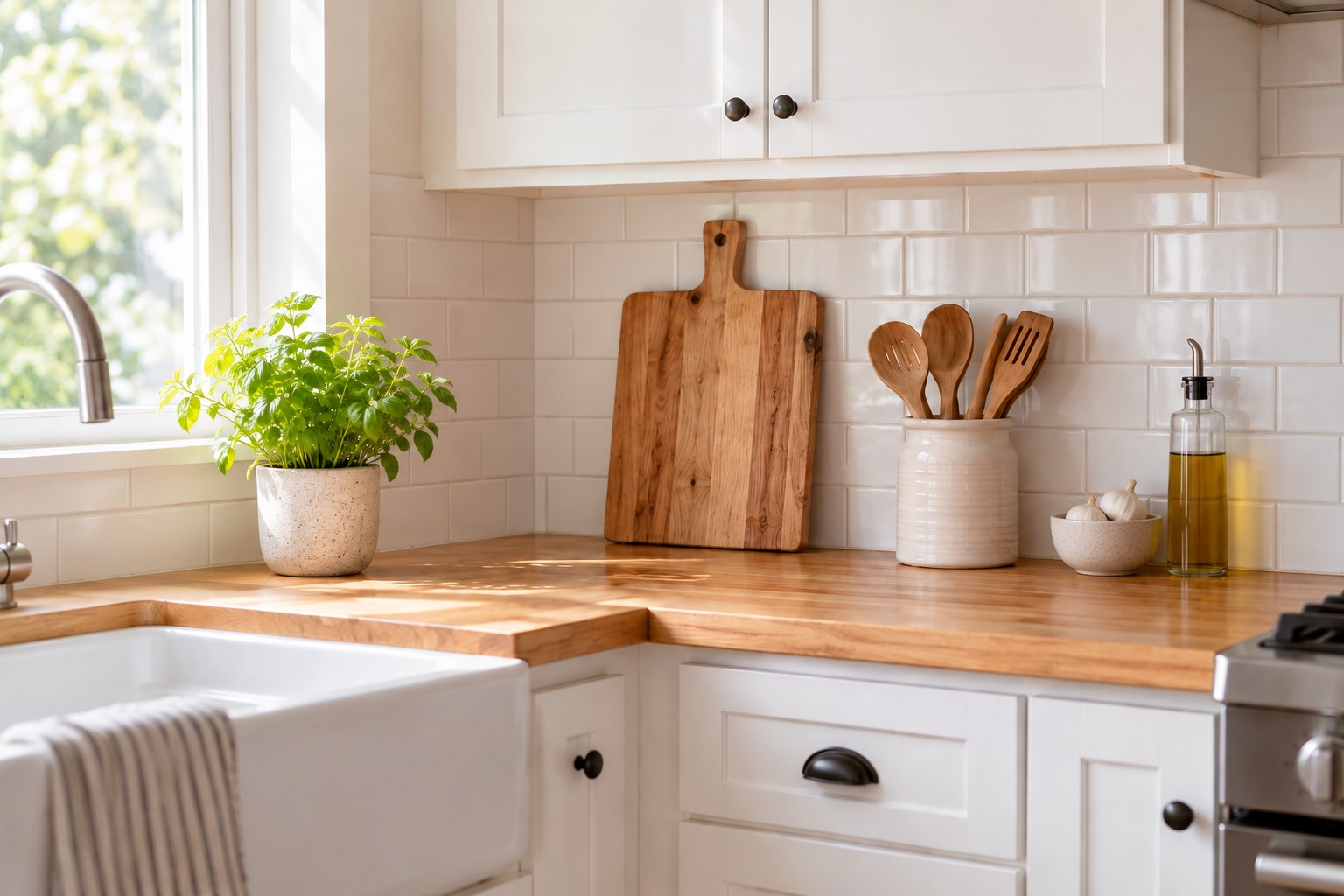
Kitchen counters have a way of collecting things that were never meant to stay there permanently. A small appliance gets left out after breakfast, mail lands beside the fruit bowl, and a few everyday objects slowly turn into a crowded surface.
A clear counter does not have to mean an empty kitchen. The goal is simply to leave enough open space for cooking, cleaning, and everyday routines without constantly moving things out of the way.
A useful starting point is to look at every item on the counter and ask whether it truly needs to live there.
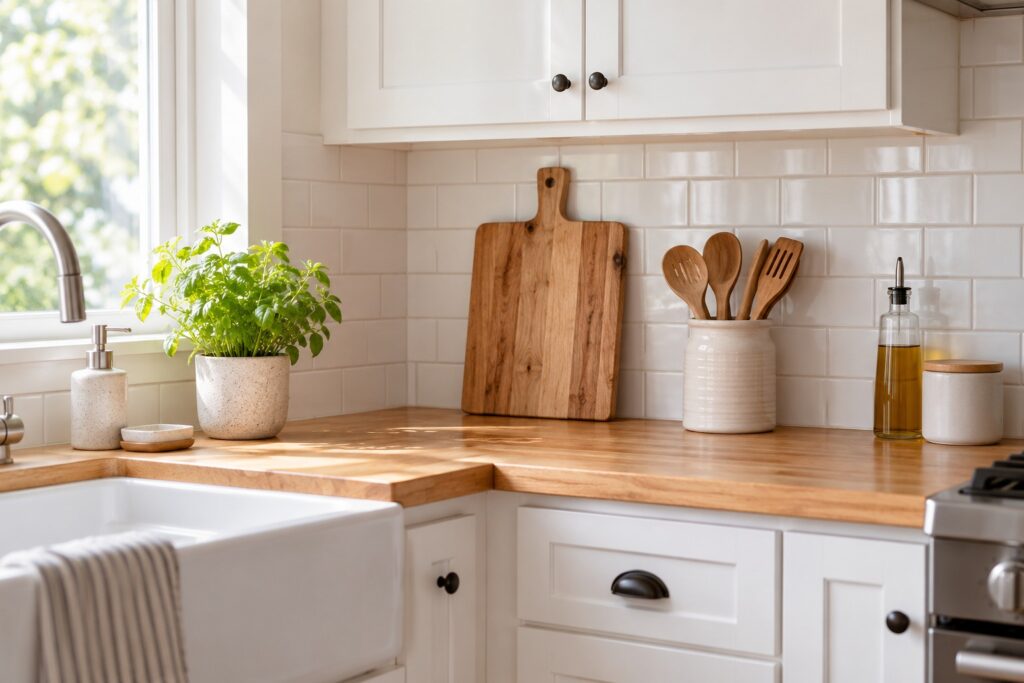
Start With Appliances You Do Not Use Every Day
Small appliances can take up a surprising amount of counter space.
A blender, toaster, coffee maker, rice cooker, stand mixer, or food processor may all be useful, but usefulness alone does not mean every appliance needs a permanent place on the counter.
If you use an appliance every morning, keeping it within reach may make sense. But if something is used only once or twice a week, it may be better stored in a cabinet, pantry, or appliance cupboard.
The easiest way to decide is to think about your normal routine. If putting an appliance away would barely affect your day, the counter probably does not need to store it.
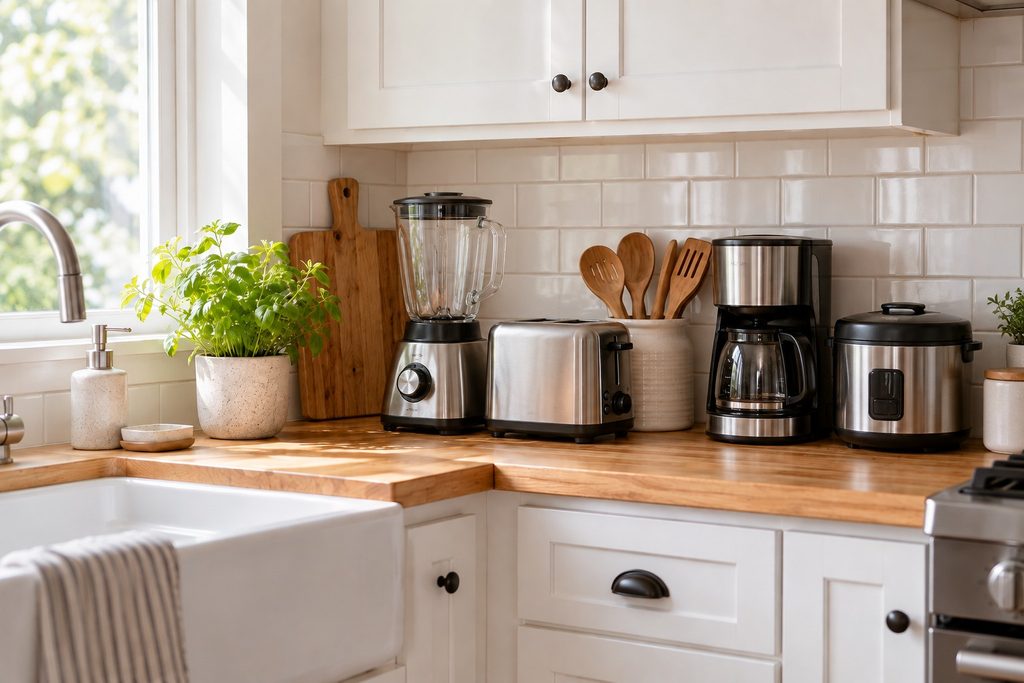
Removing even one or two bulky appliances can make a small kitchen feel noticeably easier to use.
Move Paperwork Somewhere Else
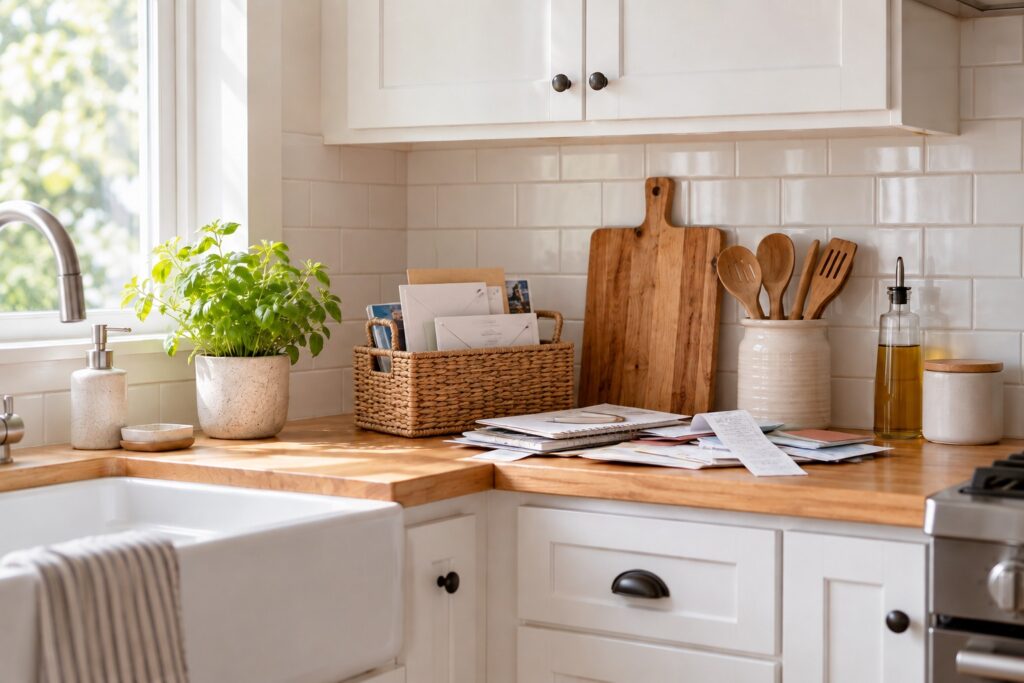
Kitchen counters often become an unofficial landing place for mail, receipts, shopping lists, school papers, and instruction manuals.
Because paper lies flat, one or two pieces may not seem like clutter at first. But piles build quickly, and once they do, the counter becomes harder to wipe down and more difficult to use as a working surface.
Instead of organizing paper on the kitchen counter, create one defined place for it somewhere nearby.
A small basket, wall file, desk tray, or household inbox can work well. The important part is giving incoming papers a destination that is not the food-preparation area.
If a shopping list needs to remain visible, consider a magnetic notepad on the refrigerator or a small board mounted nearby.
Remove Duplicate Tools
A kitchen counter can also become crowded with several items that do almost the same job.
You might have two utensil holders, several cutting boards, multiple bottles of oil, or more than one container of frequently used spices.
Individually, none of these objects seems unnecessary. Together, however, they can take up a large amount of working space.
Keep the version you reach for most often and store the rest.
One utensil container may be useful beside the stove. Three separate containers filled with tools are usually harder to justify. The same idea works for cutting boards, salt containers, oils, and countertop storage jars.
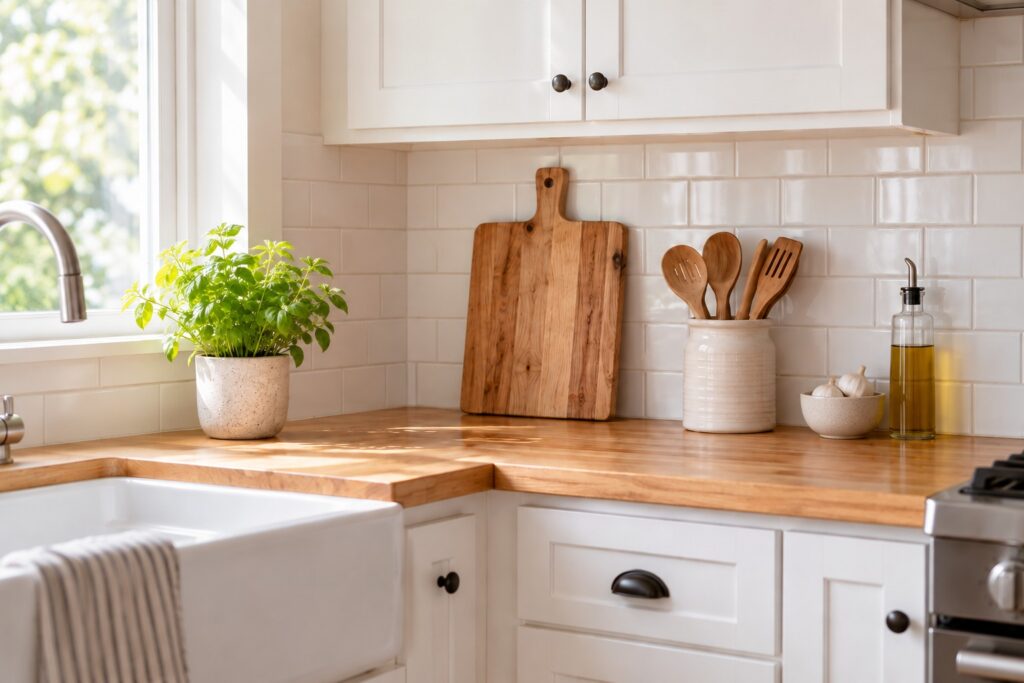
A smaller selection also makes it easier to see what you actually use.
Give Countertop Food a Defined Area
Some food makes sense on the counter. A fruit bowl, bread basket, or a few breakfast items may need to stay accessible.
The problem begins when food gradually spreads beyond one area.
Unopened groceries, snacks, supplements, condiment bottles, bread bags, fruit, and partially used packages can quickly turn the entire counter into storage.
Instead of trying to remove everything, give countertop food a clear boundary.
For example, use one fruit bowl and one small basket for bread or snacks. When those containers are full, move the extra items back to the pantry or cabinet.
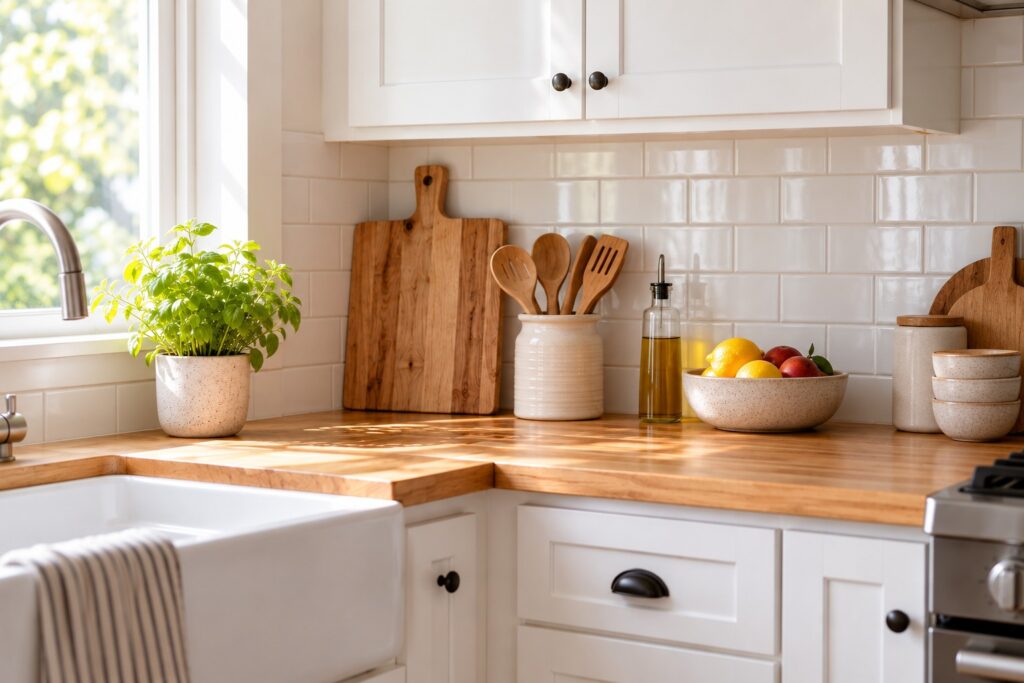
A defined food zone is easier to maintain than allowing items to spread across every available surface.
Keep Decorations From Taking Over Work Space
A kitchen does not have to be purely functional. A plant, vase, candle, or decorative object can make the room feel warmer and more personal.
But decorations should not regularly interfere with cooking or cleaning.
If you have to move a decorative object every time you prepare food, it is probably using valuable work space.
Try keeping one or two simple decorative pieces in areas that are naturally less useful for food preparation, such as a far corner of the counter.
The goal is not minimalism for its own sake. It is simply to make sure the decorative parts of the kitchen do not compete with the practical ones.
Simplify the Sink Area
The area around the sink often collects more items than necessary.
Dish soap, hand soap, scrub brushes, spare sponges, cleaning sprays, cloths, dishwasher products, and other supplies can all end up around the sink.
Most of these do not need to remain visible.
Keep only the products you use during normal daily cleanup within reach. Store backups and less frequently used cleaners under the sink or in a nearby cabinet.
A small tray can help contain dish soap, hand soap, and a sponge so they feel like one organized group rather than several loose objects.
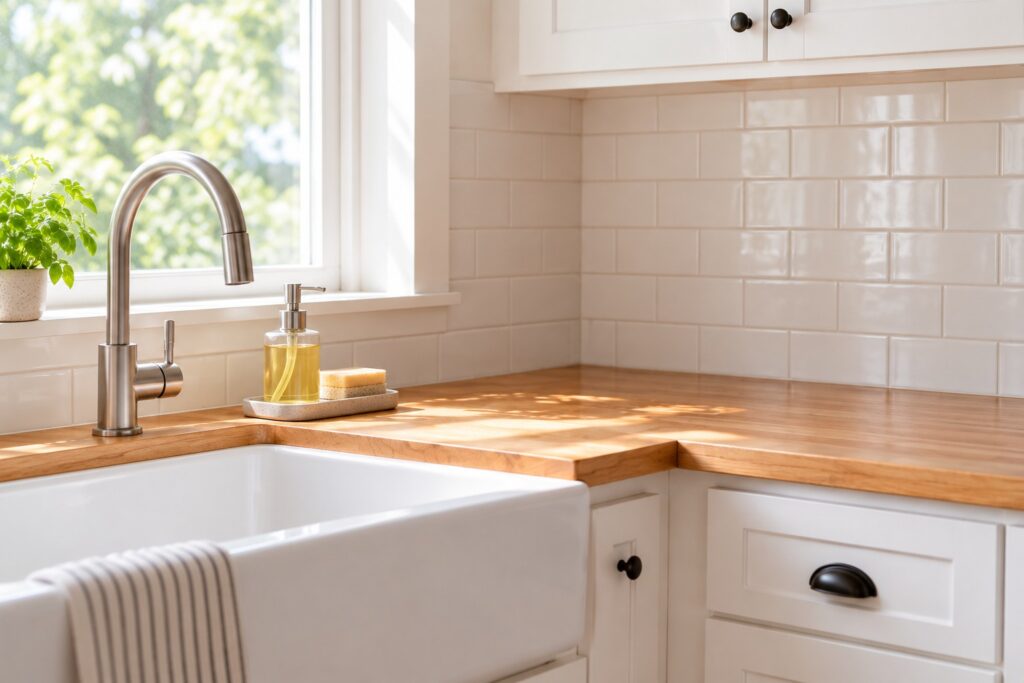
This also makes wiping the counter easier because fewer items have to be moved.
Decide What Actually Deserves to Stay
Once the obvious clutter is gone, look at what remains.
There is no perfect number of objects for a kitchen counter. A household that cooks several meals every day will naturally keep different things accessible than a household that cooks only occasionally.
What matters is whether each item has a clear reason to stay.
A practical counter might include one frequently used appliance, a utensil holder, a cutting board, cooking oil, a small fruit bowl, basic sink supplies, and one decorative item.
Another household may need less or more.
The important question is not, “Does this look minimal?”
It is:
“Does keeping this here make the kitchen easier to use?”
Try a Simple One-Week Reset
If you are unsure what belongs on the counter, try temporarily clearing more than you normally would.
For one week, bring items back only when you actually need them.
A coffee maker used every morning will quickly return. A blender used once during the week may not need permanent counter space. Decorative objects that you never miss can probably live somewhere else.
This approach helps the counter reflect your real routine rather than the collection of things that happened to accumulate there over time.
Quick Kitchen Counter Checklist
Before deciding that an item should stay on the counter, ask:
- Do I use this almost every day?
- Does keeping it here make an everyday routine easier?
- Is there another item on the counter that does the same job?
- Could this fit comfortably in a drawer, cabinet, or pantry?
- Does it make the counter harder to clean?
- Would I deliberately put it here if I were starting with an empty counter?
You do not need to remove everything at once.
Start with the easiest categories: paperwork, duplicate tools, rarely used appliances, excess food, and extra cleaning products.
Once those are gone, it becomes much easier to see which objects truly belong on your kitchen counter.